Wednesday, April 16, 2025

AMA Releases Spring Quarter PLA Applications

On the AMA PLA page here, find the Spring PLA PDF agenda here.   (See "Calendar" at bottom of blog).

There are 49 items, although a few are deletions or simply administrative changes (like owner-laboratory).

Ask for a comment packet immediately (see instructions on PDF) and submit comments by April 22.

Tempus applies for four codes (HRD, Immune Profile Score, whole slide imaging for biomarkers (lung & endometrial).  


##

CALENDAR

Spring 2025 PLA calendar

March 11, 2025: Application submission deadline

April 15, 2025: Public agenda posted to website

April 22, 2025: Interested party comment request deadline

April 24, 2025: PLA-TAG consideration completed

May 1, 2025: Panel vote

July 1, 2025: New and deleted codes publication date

Oct. 1, 2025: New and deleted codes effective date

CPT® 2026: New and deleted codes publication

CMS Releases Proposed Inpatient Rule FY2026

On April 15, 2025, CMS released the final Part C/Part D rule for 2026, with the total length cut in half from draft to final (many topics dropped - here).  That rule was a "Biden" proposal and a "Trump" final.

##

On April 11, 2025, CMS released the inpatient proposed rule for CY2026.  Find the CMS fact sheet here.  Find the inspection copy here, and look for the typeset Fed Reg copy on April 30.   Here.   90 FR 18002 (490pp).  New Tech starts at page 18090.

It's Still Long - Equity for Measures Dropped

It's still long under the new adminstration; the inspection copy (typescript) runs 1361pp.   The term "equity" appears about 60 times, but often in context of proposed dropping of hospital quality measures containing the term "equity."  I had no matches on the term "artificial intelligence."  (There is one on "Machine learning," in an NTAP discussion).

There is a discussion of developing national cost to charge ratios (inspection, 217ff).  

The SEP-1 sepsis measure has been somewhat controversial but remains in the 2026-27-28 measures.

New Tech Applications

Add on new tech payments (NTAP) beging at E, page 221 (inspection) and run to page 485.   Sunsetting and continuing NTAP are at page 243 (inspection), table II.E-01.A and .B.   There were 19 new applications under the normal pathway (page 247, inspection).  14 are carried forward into the current discussion (starting (a) AUCATZYL, page 249 inspection).   

There's at least one diagnostic test, TRIVERITY (sepsis), page 473ff (inspection).  Alternate pathway NTAPs begin at page 481 (inspection).  

##

AI CORNER

##

For a CMS policy audience, here's a structured summary of the FY 2026 New Technology Add-On Payment (NTAP) applications and policy context under the Inpatient Prospective Payment System (IPPS), as outlined in the FY2026 Proposed Rule (CMS-1833-P):


1. NTAP Program Purpose and Criteria

CMS offers NTAPs under 42 CFR 412.87 to provide temporary additional payments for eligible new medical services and technologies that:

  • Are new (not substantially similar to existing technologies)

  • Are costly, such that the MS-DRG payment is inadequate

  • Offer substantial clinical improvement over existing treatments

Alternate pathways are available for:

  • FDA-designated Breakthrough Devices

  • Qualified Infectious Disease Products (QIDPs)

  • Limited Population Antibacterial Drug (LPAD) pathway products

Add-on payments are not budget neutral and are typically up to 65% or 75% of the cost above the standard MS-DRG payment, depending on technology type.


2. New Application Volume and Process

For FY2026, CMS received:

  • 19 traditional pathway applications

    • 14 applications are reviewed in the proposed rule

    • 2 were ineligible (no FDA marketing authorization by May 1, 2025)

    • 3 were withdrawn

CMS has also detailed the process improvements, including:


3. Summary of Continuing, New, and Discontinued NTAP Technologies

A. Continuing NTAPs in FY2026 (selected technologies)

(See Tables II.E-01.A and II.E-01.B)

Examples include:

  • CASGEVY™ and LYFGENIA™: gene therapies for sickle cell disease, with NTAP amounts up to $2.3 million

  • TriClip™ G4 (mitral valve repair): $26,000

  • EPKINLY™ and COLUMVI™ (B-cell lymphomas): $6,504

B. Discontinued NTAPs

(Table II.E-02)

Technologies are discontinued if the 3-year anniversary of market entry occurs before April 1, 2026. Discontinued examples include:

  • CYTALUX® (ovarian indication)

  • GORE® TAG® Thoracic Branch Endoprosthesis

  • iFuse Bedrock Granite

Note: CERAMENT® G was approved for one indication in a prior year but now has a new FY2026 application for a different clinical use.


4. Highlights from FY2026 Traditional Pathway Applications

Detailed summaries are included for each technology in the Proposed Rule and MEARIS. Example:

  • AUCATZYL® (obecabtagene autoleucel): A CAR-T cell therapy for relapsed/refractory B-ALL. FDA approved November 2024. Uses new ICD-10-PCS codes XW0338A and XW0438A.

Other applicants include novel biologics, implantable devices, and diagnostics, each evaluated against the newness, cost, and clinical improvement criteria.


5. Strategic Implications for Stakeholders

  • Hospitals should ensure they code eligible discharges properly to capture NTAP.

  • Manufacturers must align FDA timelines with CMS deadlines (May 1), submit cost modeling data, and clearly differentiate their technology.

  • Policy teams should monitor MEARIS for transparency in applications and rulemaking trends, particularly for high-cost therapies (e.g., gene therapy NTAPs exceeding $1M).


Highlight a few examples from the NTAP applications.

###

In the FY2026 CMS IPPS proposed rule, several of the 14 reviewed NTAP applications stand out for their clinical novelty, technological sophistication, or potential policy significance. Among the most striking is CASGEVY™ (exagamglogene autotemcel), a gene therapy approved for sickle cell disease (SCD), which carries a proposed NTAP of $1.65 million. CASGEVY™ uses CRISPR-based gene editing to reprogram the patient’s own stem cells—a dramatic shift from conventional transfusion-based SCD management. 

Closely related is LYFGENIA™ (lovotibeglogene autotemcel), another cell-based gene therapy for SCD, with an even higher proposed NTAP of $2.325 million, underscoring the emergence of ultra-high-cost genetic interventions and CMS’s evolving role in bridging access through temporary add-on payments.

Equally innovative is the HEPZATO™ KIT, which combines melphalan chemotherapy with a hepatic delivery system that isolates liver circulation during infusion, enabling high-dose chemotherapy targeted to liver tumors. The proposed NTAP of $118,625 reflects both the technical complexity and the potential to extend life in metastatic disease settings with few alternatives. 

Another standout is the EVOQUE™ Tricuspid Valve Replacement System, one of the first devices to target tricuspid valve regurgitation—a historically undertreated condition. With a proposed NTAP of $31,850, EVOQUE™ signals CMS’s growing recognition of structural heart innovations beyond the aortic and mitral domains.

Finally, the Paradise™ Ultrasound Renal Denervation System represents a novel application of ultrasound to modulate sympathetic nerves in the renal artery, offering an interventional therapy for patients with resistant hypertension. The device is seeking a $14,950 NTAP, and its inclusion highlights CMS’s increasing engagement with neuromodulatory devices that cross disciplinary boundaries between cardiology and nephrology. Together, these several applications reflect the growing diversity and sophistication of NTAP submissions, and the policy challenge of integrating frontier therapies into a prospective payment model.

Tuesday, April 15, 2025

Friends of Cancer Research: From RECIST to AI-RECIST

 Friends of Cancer Research has identified multiple key operational problems in precision oncology, and help stakeholders craft solutions.

Here's a new effort of considerable interest - bringing AI to RECIST - the detection of cancer relapse.

Find the home page here:

https://friendsofcancerresearch.org/ai-recist/

See also a 3 page mini summary deck:

https://friendsofcancerresearch.org/wp-content/uploads/ai.RECIST-Project-Slides.pdf

Better measurement (consistency and precision) of imaging relapse is CRITICAL to molecular MRD development, as imaging is taken as the gold standard against which molecular MRD must out-perform.   The more precise and tight the error bars are, around imaging, the easier and quicker it is to show better performance for liquid biopsy.


###

They summarize as follows:

What is the unmet need and why does it matter?

Tumor response metrics are used to determine the efficacy of cancer therapies in solid tumor clinical trials. These measurements rely on standardized and unbiased criteria through the Response Evaluation Criteria in Solid Tumors (RECIST) performed by expert human readers. RECIST-based assessments provide a systematic approach to objective tumor measurements at defined timepoints, but their implementation faces several challenges, including investigator bias, subjectivity in lesion selection, and variability in measurements across clinical sites and radiologists. Artificial intelligence (AI)-driven tumor measurement tools have the potential to address these challenges, reducing variability, increasing efficiency, and improving measurement accuracy.


How are we helping to find solutions?

Friends created a research partnership to evaluate AI-driven tumor measurement tools alongside human-reader RECIST assessments. 

Key objectives: 

  • Assess AI tool agreement – Can AI-based tools provide consistent tumor measurements?
  • Compare variability among AI tools and human assessments – How well do AI-driven measurements align with RECIST-based readings by human readers? 
  • Explore AI’s impact on efficiency – Can AI tools reduce variability and streamline clinical trials? 

How does this impact patients?

Blinded Independent Central Review (BICR) is used in clinical trials to ensure accurate tumor assessments. Regulators often require BICR to minimize bias by blinding human readers to patient and treatment details when evaluating imaging-based endpoints like progression-free survival and objective response rate. However, BICR is resource-intensive, potentially prolonging trial timelines, delaying treatment decisions, and increasing costs. These delays may limit patient access to new therapies and, in some cases, may require additional imaging or adjudication when discrepancies occur between local and central assessments. AI-driven tumor measurement tools have the potential to streamline this process by ensuring consistent, unbiased verification of local assessments, reducing review time, and improving trial efficiency without compromising data integrity. By enhancing the speed and reliability of tumor measurements, AI could accelerate clinical trial progress and improve patient access to effective treatments.


###


Friday, April 11, 2025

AI Watch: Google Publishes 68-page Booklet on Prompt Engineering (For Using AI)

Google publishes a 68-page booklet on the science and art of "prompt engineering," that is, interacting with AI to accomplish goals.

https://www.kaggle.com/whitepaper-prompt-engineering

Google has an auto podcast (19 min) about the book here:

https://www.youtube.com/watch?v=F_hJ2Ey4BNc

  • Note that the booklet is designed for a particular interface to Google Gemini, and, it is written for pretty advanced users.   
  • BUT there is still much to be gleaned for less-advanced users, as you can look over the shoulders of professionals and see how experts interact with AI via prompts.


 See an extensive "AI CORNER" below.

###

AI CORNER

Here’s an AI review of the 2025 Google Guide to Prompt Engineering by Lee Boonstra, tailored for your genomic policy blog readers who also follow AI developments:


๐Ÿ” Worth Your Download?

Yes—if you use, tune, or even think about large language models (LLMs) in your work.
This is Google’s internal playbook for how to write prompts that actually work. It’s presented accessibly but backed by deep product and engineering expertise from teams working on Gemini and Vertex AI.


๐Ÿ“˜ What the Paper Covers

This 68-page guide serves as both a primer and a cookbook for crafting prompts that optimize performance, reliability, and safety in LLMs. It walks you through:

  • Prompt formats (zero-shot, few-shot, chain-of-thought, system/role/contextual prompting)

  • Sampling controls (temperature, top-K, top-P)

  • Advanced strategies like:

    • Step-back prompting

    • Tree of Thought

    • ReAct prompting (LLM + tools = baby agents)

    • Self-consistency voting

    • Automatic prompt engineering


๐Ÿง  Highlights & Takeaways

  • Prompting is engineering, not guessing. Each example (whether for classifying a movie review or writing Python code) comes with clear configurations and an explanation of why it works.

  • LLMs are stochastic, not deterministic. You’ll get repeatable, better output when you configure sampling controls like temperature, top-k, and top-p in combination—not in isolation.

  • Chain-of-Thought and Step-Back prompting are now table stakes for complex reasoning tasks.

  • Few-shot examples aren't just filler—they’re essential for guiding structure, logic, and tone.

  • Best practices include using positive instructions over constraints, setting token limits smartly, and mixing up class order in classification prompts to reduce overfitting.

  • Debugging code with LLMs? The guide walks through real examples, from bash-to-python translations to catching bugs using self-generated logs and prompts.


๐Ÿงช Why It’s Relevant to Genomics and Policy

Even if you're not writing code:

  • Prompt engineering controls reproducibility and reduces hallucinations, two themes familiar to diagnostics labs.

  • The system/role/contextual prompts mirror clinical decision pathways, which could be useful when working with AI to parse literature, generate SOPs, or synthesize regulatory language.

  • As LLMs are deployed in diagnostics, good prompt design becomes a compliance issue, not just a UX feature.


๐Ÿ“Ž For Power Users and Curious Analysts Alike

Whether you’re validating a new clinical NLP tool, training a chatbot for patient triage, or using GPT to summarize MolDx LCDs, this guide shows you how to fine-tune your input for consistent, policy-aligned output.


Bottom Line:

Google’s Prompt Engineering Guide is the best structured, most readable, and most example-rich guide to LLM prompting as of 2025.
You’ll come away with actual copy-pasteable strategies and a mental model of how prompts, model settings, and outputs interact.

Let me know if you'd like a visual cheat sheet or a one-page summary handout for internal staff or clients.

###

OK. Let's assume you use AI 30 minute  a day in your work, for the past year, so you're pretty experienced, but self taught.    What are 10 things you will find both NEW and also USEFUL in this book?

###

Great framing. Assuming I’m an experienced, non-professional AI user (e.g., using ChatGPT, Gemini, Claude, or Perplexity 30–60 minutes daily for tasks like research, email drafts, code help, writing assistance, brainstorming), here are ten concepts from the 2025 Google Prompt Engineering Guide that would be both new to me and valuable:


๐Ÿ”Ÿ Ten Valuable New Concepts

  1. Step-Back Prompting
    ๐Ÿ”„ Instead of solving a task directly, first prompt the model to consider general principles or patterns, then use that response to guide the specific task.

    Why it’s useful: Helps with tasks that require reasoning or “thinking outside the box.” Great for strategy, synthesis, or creative writing.

  2. Self-Consistency Prompting
    ๐Ÿ—ณ️ Send the same Chain-of-Thought prompt multiple times at high temperature, then “vote” on the most common final answer.

    Why it’s useful: Makes your answers more robust and reduces hallucinations in complex reasoning tasks—especially for ambiguous queries.

  3. Tree-of-Thought Prompting (ToT)
    ๐ŸŒณ Instead of a linear Chain-of-Thought, this method explores multiple reasoning branches before converging on a solution.

    Why it’s useful: Helps in complex problem-solving, planning, or design work where multiple valid paths exist.

  4. ReAct Prompting (Reason + Act)
    ๐Ÿค– Combines internal reasoning with external tool use—like search APIs or code execution—to improve real-world answers.

    Why it’s useful: Gives you a basic agent-like workflow without needing to build an agent. Perfect for market research or current events queries.

  5. System / Role / Contextual Prompting as Distinct Modes
    ๐Ÿงฉ Clear separation of three prompt layers: system (what the model should do), role (who it's acting as), and context (the data it needs).

    Why it’s useful: Lets you tune tone and style (e.g., make the model act like a physician or a 5th-grade teacher), and also better structure your multi-part prompts.

  6. Prompt Variables for Reusability
    ๐Ÿง  Use {city}, {disease}, {product} etc. inside prompts so they can be reused dynamically across tasks or in apps.

    Why it’s useful: Makes it easy to automate AI workflows or build prompt libraries—saves time in daily use.

  7. Output Control via Sampling Configuration
    ๐ŸŽ›️ Combining temperature, top-K, top-P, and max tokens effectively—not just using one slider at a time.

    Why it’s useful: You gain much better control over creativity vs. reliability (e.g., using temperature 0 + top-P 0.9 for deterministic classification tasks).

  8. JSON Prompting for Safer, Structured Output /   JavaScript Object Notation. 
    ๐Ÿงพ Ask the model to return its answers in a strict JSON schema—even showing the format in the prompt.

    Why it’s useful: Helps with automation and reduces hallucination—critical if you're using AI for data extraction or to pass into other tools.

  9. Automatic Prompt Engineering (APE)
    ๐Ÿคฏ Use the model itself to generate better prompts, then score and select the best-performing one.

    Why it’s useful: You can "meta-prompt" your way to better performance in novel or high-risk tasks (e.g., regulatory writing, hypothesis generation).

  10. Role Prompting with Tone/Style Modifiers
    ๐ŸŽญ Assign roles and style at once (e.g., “You are a humorous travel guide who speaks informally.”)

Why it’s useful: Saves you from endlessly rewriting tone—great for brand voice, presentations, or teaching materials.


###
Let's say you work in reimbursement consulting for investors, genomisc labs, and write white papers in the field.   ???

###

Perfect—thanks for that context. Here are ten things from the Google Prompt Engineering Guide that would be new and valuable specifically for a genomics policy consultant like you, especially in fundraising strategy, investor due diligence, and white paper development:


๐Ÿ”Ÿ Prompt Engineering Insights for Genomics Industry Consulting

  1. System/Role/Context Prompt Layering
    ๐Ÿงฉ Explicit separation of “what the model should do,” “who it’s acting as,” and “what background data it has.”

    Use case: Draft a report where the model behaves like an oncology investor relations officer or a regulatory reviewer—shifting tone, vocabulary, and depth accordingly.

  2. Step-Back Prompting for Landscape Synthesis
    ๐Ÿ”„ Ask the model to summarize general trends (e.g., "What are the components of a successful MRD test launch?") before writing your actual white paper content.

    Use case: Improves strategic framing in pitch decks and executive summaries—forces a broader view before specifics.

  3. Chain-of-Thought Prompting for Claim Support
    ๐Ÿง  Walks the model through intermediate reasoning steps, showing how it links data, citations, or regulatory events.

    Use case: Helps when you’re comparing payor coverage criteria for LDTs vs. PMA tests, or modeling reimbursement timelines.

  4. Self-Consistency Sampling for Investment Theses
    ๐Ÿ—ณ️ Run a CoT prompt 5+ times at high temperature, then find the dominant investment thesis or forecast.

    Use case: Reduce bias or cherry-picking when generating multiple perspectives for a strategic options memo.

  5. Prompt Variables for Reusable Due Diligence Templates
    ๐Ÿ” Write prompts with placeholders like {company}, {assay}, {FDA status} to generate fast turnaround analyses.

    Use case: Quickly switch focus from a ctDNA MRD company to a methylation early detection firm without rewriting core frameworks.

  6. Few-Shot Prompting with Counterexamples
    ๐Ÿ“Š When evaluating pitch language, regulatory claims, or clinical utility arguments, provide “good” and “bad” versions.

    Use case: Great for training junior team members or creating investor training materials—e.g., what not to say in an MRD pitch.

  7. ReAct Prompting for Competitive Intelligence
    ๐ŸŒ Combine LLM reasoning with external tools like search to assess, say, “recent PMA approvals in liquid biopsy.”

    Use case: Prototype lightweight research agents that triangulate public FDA, CMS, and investor data in one query loop.

  8. Structured JSON Outputs for Investment Memos  / JavaScript Object Notation. 
    ๐Ÿงพ Prompt the LLM to output a JSON with structured fields like {clinical utility}, {reimbursement}, {competitive landscape}.

    Use case: Automates memo population and lets you export data directly into Excel or investor briefing templates.

  9. Instruction-Over-Constraint Framing
    Instead of “Don’t talk about reimbursement,” say “Summarize investor risks without addressing reimbursement issues.”

    Use case: Better control when shaping nuanced LLM output (e.g., evaluating MRD platforms where coverage is still pending).

  10. Multimodal Prompt Planning
    ๐ŸŽฅ Anticipates combining text prompts with graphics, tables, or datasets (e.g., inputting a Kaplan-Meier curve or coverage policy PDF).

Use case: As LLMs integrate visual inputs, you’ll prompt them to summarize data slides or parse a Medicare LCD directly.


Let me know if you’d like a tailored prompt library for genomics consultants, or a slide summarizing these for your next investor pitch workshop.

##

Prompt library.

##


 Absolutely. Here’s a Tailored Prompt Library for Genomics Consultants, based on the 10 insights we discussed. These are real-world, reusable prompt templates designed for your work in:

  • ๐Ÿงฌ Genomics policy

  • ๐Ÿ’ฐ Fundraising strategy

  • ๐Ÿ“Š Investor due diligence

  • ๐Ÿ“„ White paper development


๐Ÿง  Prompt Library: Genomics Consulting Edition

Each entry includes:

  • Use Case

  • Prompt Template

  • Tips for Use


1. Positioning a Company for Investors (System + Role Prompting)

Use Case: Write a compelling intro to a pitch deck or white paper.

Prompt:

Act as a biotech investor relations officer. Write a one-paragraph summary introducing {company_name}, a genomics company specializing in {assay_type}. The summary should emphasize clinical need, competitive edge, and addressable market.

Tip: Replace {company_name} and {assay_type} with client details.


2. Fundraising Framing via Step-Back Prompting

Use Case: Start a white paper with strong strategic framing.

Prompt:

Before analyzing {company_name}, summarize the top 3 unmet needs or bottlenecks in the field of {domain}, such as MRD testing, ctDNA, or methylation detection. Then use that to frame the company’s solution.

Tip: Great for executive summaries or slide 2 of a deck.


3. Coverage and Reimbursement Reasoning (Chain of Thought)

Use Case: Generate a walkthrough of reimbursement risks.

Prompt:

You are a Medicare reimbursement expert. A genomic test has FDA approval but limited Medicare LCD coverage. Think step-by-step about the hurdles this test will face for nationwide reimbursement and how a company might overcome them.

Tip: Use when planning payor strategy timelines.


4. Compare Companies with Self-Consistency Sampling

Use Case: Generate multiple investment perspectives, then pick the best.

Prompt:

Compare Guardant Health and Personalis in the MRD space. What are the key strategic differences in their approach to clinical evidence, FDA approval, and payer strategy? Let’s think step-by-step.

Tip: Run 3–5 times and choose the most consistent or compelling answer.


5. Automated Due Diligence Memos with Prompt Variables

Use Case: Quickly switch from company to company.

Prompt:

Summarize the clinical value, commercial traction, and regulatory status of {company_name}, which offers a {assay_type} assay targeting {clinical_indication}. Focus on unmet need, FDA status, and payor engagement.

Tip: Plug into Airtable, Notion, or Google Sheets for batch outputs.


6. Messaging Calibration (Few-Shot Prompting with Good/Bad Examples)

Use Case: Train teams or refine pitch language.

Prompt:

Below are examples of how to describe a genomic test to payers. Which is stronger, and why? Then write a better version:
Example A: "We believe our test is helpful."
Example B: "Our test demonstrates 95% sensitivity for recurrence detection in early-stage CRC patients, with peer-reviewed validation."

Tip: Add your own examples to personalize.


7. Market Landscape via ReAct Prompting

Use Case: Combine LLM + real-time search for competitive intelligence.

Prompt:

How many FDA-approved liquid biopsy MRD tests exist in the U.S. market as of 2025? Search for public announcements and approvals, then summarize key players and test types.

Tip: For tools like Perplexity, Claude with browsing, or LangChain agents.


8. Structured Memo Output (JSON Prompting)

Use Case: Auto-populate due diligence templates.

Prompt:

*Summarize {company_name} in this format:

{
  "clinical_utility": "",
  "regulatory_status": "",
  "reimbursement_outlook": "",
  "competitive_advantage": "",
  "investor_risks": ""
}
```*

**Tip**: Outputs can be dropped into Airtable, Excel, or merged into slides.

---

### 9. **Instruction Over Constraint Prompting (Tone Shaping)**  
**Use Case**: Avoid ambiguity or over-hallucination.

**Prompt**:
> *Write a three-paragraph section for an investor memo about {company_name}. Emphasize product-market fit and FDA status. Do not discuss reimbursement strategy.*

**Tip**: Emphasize what *to* include rather than just what *not* to.

---

### 10. **Image or Slide Interpretation (Future Multimodal Prompt)**  
**Use Case**: Explain a chart or K-M curve for a genomics test.

**Prompt**:
> *Here is a Kaplan-Meier survival curve from a clinical trial of {company_name}’s MRD test in NSCLC. Summarize what it shows about test performance and how it supports the clinical utility claim.*

**Tip**: Will be useful in GPT-4 Vision, Gemini 1.5, and multimodal models.

---

Would you like this as a **Google Doc**, **Markdown**, or **Notion database**?

Or, I can add **a section with prompts tailored for slide decks** and **investor FAQs** next.


####
For users of SCITE.AI, see an 18 page guide:
https://www.researchsolutions.com/ebook-aiprompts-academic

Journal Watch: How to Achieve NYState Approval for NGS

Galbo et al. have published, "A Comprehensive Guide to Achieving New York State Clinical Laboratory Evaluation Program Approval for Next-Generation Sequencing Assays," in J Molec Dx, March 28, 2025.  Even better, it's open-access.

Many labs have to get NYState approval, either because they're based in NY State, or have patients who originate in NYState.   What's more, understanding this template for NYState approval for NGS tests will probably give you a leg-up with Medicare MolDx tech assessment as well (a review system that has no comparable publication.)

Find it here:

https://www.jmdjournal.org/article/S1525-1578(25)00067-4/fulltext

17 pages.


AI CORNER

Here’s a detailed summary of the new Galbo et al. 2025 Journal of Molecular Diagnostics paper for your genomic policy blog readers:


Galbo et al., 2025: A Practical Roadmap for NY State CLEP Approval of NGS Assays

Title: A Comprehensive Guide to Achieving New York State Clinical Laboratory Evaluation Program Approval for Next-Generation Sequencing Assays
Authors: Galbo, Klees, Burgher, Miles, Morrison, and Glenn
Journal: Journal of Molecular Diagnostics, April 2025
Link: https://doi.org/10.1016/j.jmoldx.2025.02.009


Why This Paper Matters

Given a prominent role in FDA's plan to regulate LDTs, New York State's CLEP program offers a longstanding and rigorous model for oversight. 

However, detailed peer-reviewed documentation of what CLEP actually requires—especially for complex NGS oncology panels—has been limited. This paper addresses that gap.


What’s in the Paper

The authors walk readers through step-by-step CLEP approval using their own in-house validated assay—RPPH (Rapid Pan-Heme)—as a case study. RPPH is a DNA/RNA-based NGS assay targeting >400 genes relevant to hematologic malignancies.

Key features of the paper include:

  • Structure of CLEP Approval: CLEP validation is broken down into six major phases:

    1. SOP documentation

    2. Quality control (QC) metrics

    3. Run-level control requirements

    4. Analytical validation for accuracy

    5. Precision/reproducibility studies

    6. Clinical reporting

  • Detailed Protocols: The paper provides meticulous documentation of wet lab methods for DNA and RNA workflows (e.g., extraction, library prep, sequencing on Illumina NextSeq, QC thresholds).

  • QC Criteria and Controls: It defines exact metrics for pass/fail thresholds (e.g., >90% coverage at 200×, SNV/indel detection ≥80% in positive controls, contamination cutoffs in NTCs).

  • Performance Studies:

    • Batch size impact: The RPPH panel shows high concordance (≥98%) for SNVs, indels, and fusions across batch sizes from 1 to 21 samples.

    • Sensitivity studies: Variant detection was reliable down to VAF ~5%, but sensitivity dropped sharply below that—particularly for indels.

    • Orthogonal validation: Over 200 SNVs and 200 indels were confirmed using Sanger sequencing, achieving ~98% concordance.

  • Fusion Detection: RNA-based fusion detection showed robust performance, with 100% detection of known fusions in positive controls and low false positives in NTCs.


Who Should Download This

  • Lab directors navigating CLEP submissions

  • Regulatory consultants preparing for increased LDT scrutiny

  • Molecular pathologists seeking a CLEP-aligned SOP template

  • Assay developers designing new heme panels or preparing orthogonal validation datasets


Bottom Line

This paper isn’t just a report of a validated assay—it’s a roadmap for CLEP approval. Think of it as both a how-to manual and a regulatory benchmark. For labs seeking New York approval—or preparing for a future FDA-aligned world—this is one of the most practically useful publications in recent years.

Let me know if you’d like a one-slide version of this summary or a visual comparing CLEP to FDA expectations.

Thursday, April 10, 2025

Changing Gender Words in the CMS Program Manuals

Gender words being updated by CMS, as the new burocracy works through its numerous online manuals and publications.

For example, I was comparing the current verson of Publication 8, Program Integrity, Chapter 10, "Medicare Enrollment" to its newest update.  See:  (Revision 12796, 08-15-24) versus a newly revised version released as Revision 13154, 4-4-2025).

The older vision 12796 was still online this morning here.  (It will be replaced; so a cloud copy of 12796 is here.)   The newer April 2025 version 13154 is online here.

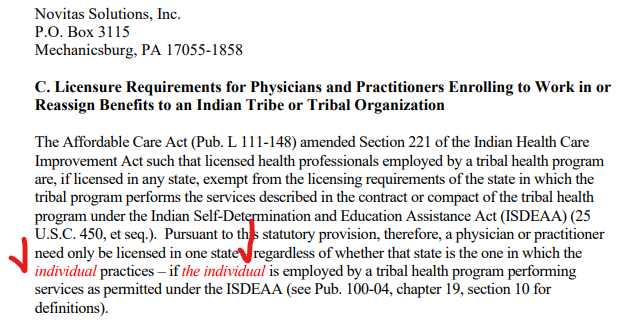
The main edit style appears to be to search all "he/she" referenences, and change them to non-gendered terms like "technician," "iindividiual," or "physician."   The new version is "he she free."

OLD "HE/SHE"


NEW: "INDIVIDUAL"
###

CMS's interest might also be drawn to the glaucoma screening benefit due to its racial content.  

Glaucoma screening was created by BIPA 2000 and is codified at SSA 1861(s)(2)(U).   The statute states,  screening for glaucoma (as defined in subsection (uu)) for individuals determined to be at high risk for glaucoma, individuals with a family history of glaucoma and individuals with diabetes;...(uu) The term “screening for glaucoma” means a dilated eye examination with an intraocular pressure measurement, and a direct ophthalmoscopy or a slit–lamp biomicroscopic examination for the early detection of glaucoma which is furnished by or under the direct supervision of an optometrist or ophthalmologist who is legally authorized to furnish such services under State law (or the State regulatory mechanism provided by State law) of the State in which the services are furnished, as would otherwise be covered if furnished by a physician or as an incident to a physician’s professional service, if the individual involved has not had such an examination in the preceding year.

While the statute 1861(s) does not mention racial groups, the regulation written by CMS staff in 2001 and 2005 at 42 CFR 410.23 does:

§ 410.23 Screening for glaucoma: Conditions for and limitations on coverage.
(a) Definitions: As used in this section, the following definitions apply:  (1) Direct supervision in the office setting means the optometrist or the ophthalmologist must be present in the office suite and be immediately available to furnish assistance and direction throughout the performance of the procedure. It does not mean the physician must be present in the room when the procedure is performed.

(2) Eligible beneficiary means individuals in the following high risk categories:
  • (i) Individual with diabetes mellitus.
  • (ii) Individual with a family history of glaucoma.
  • (iii) African-Americans age 50 and over.
  • (iv) Hispanic-Americans age 65 and over.
See also the same CMS race-specific information quoted at a public-facing page here.  

The rulemaking for the CFR dates to November 1, 2001 (66 FR 55328, p. 55272-5) and to November 21, 2005 (70 FR 70330; adding "Hispanic," p20270-72).


Tuesday, April 8, 2025

Quick Triangulations: (1) The Cost/Benefit of Prevention, (2) Insourcing-Outsourcing Genomics,

Connecting the dots between some Linked In articles and journal publications in the last several days.

PREVENTION - Does it save money?

The general answer is probably no, and the general better-question is "is prevention money well spent?"

At Linked In, Peter Neumann raises this topic here.   His point is, we should evaluate health case services on health-value created per cost, not only on whether absolute dollars are saved.   

He directs readers to a new article in JAMA Forum, by Baicker and Chandra, "Can Prevention Save Money?"  Here.  They argue that Cost/QALY and similar approaches are better than asking "does it save money?"

I made a comment that we got here in part because of too many years of glib assertions (and not by economists) that "prevention saves so much money."

On the same themes, see an April 7 Op Ed in the Washington Post by Ward & Goldman about Medicare's mistake in not covering GLP-1 drugs.   The article argues they are cost-reducing and some readers might imply cost-saving ("wide access would have extraordinary benefits to society...benefits would pour through the economy."  But many editorial factors are included like future generic pricing.


GENOMICS - The Insourcing / Outsourcing Question

A few weeks ago, Robert Boorstein wrote an article at Linked In about the perpetual debate about insourcing and outsourcing genomics - here.  His point, insourcing investments still need to be made prudently.   

In-House MRD?

I was reminded of Boorstein's points when I saw a new article on Linked IN from Decibio's Megan Nacar. It features Decibiol's data for the growth and diversity of in-house minimal residual disease testing (MRD).   See their 3-page open access PDF here.  This expansion will only be encouraged (unleashed) by the demise of the FDA LDT regulation.

(I'm not sure exactly how this works reimbursement-wise, as there are no general CPT codes nor general reimbursement policies for MRD, and MolDx seems to cover MRD only from large labs (e.g. Nataera.))

Genomic TAT?

But pair these citations with a new article (?abstract) by Wang et al. in JNCCN on biomarker turnaround time in US patients with NSCLC - here.   Using Flatiron records, they find that in a sample of 34000 patients,  NGS TAT ran to 3 weeks by 2023.   "Use of NGS increased tunaround time" and "TAT has stagnated and remains suboptimal."  

(Re TAT and insourcing, see also Dowdell 2024.)


Monday, April 7, 2025

Brief Blog; Chat GPT Beats Google

 An example from my workdesk this morning where Chat GPT beats Google.

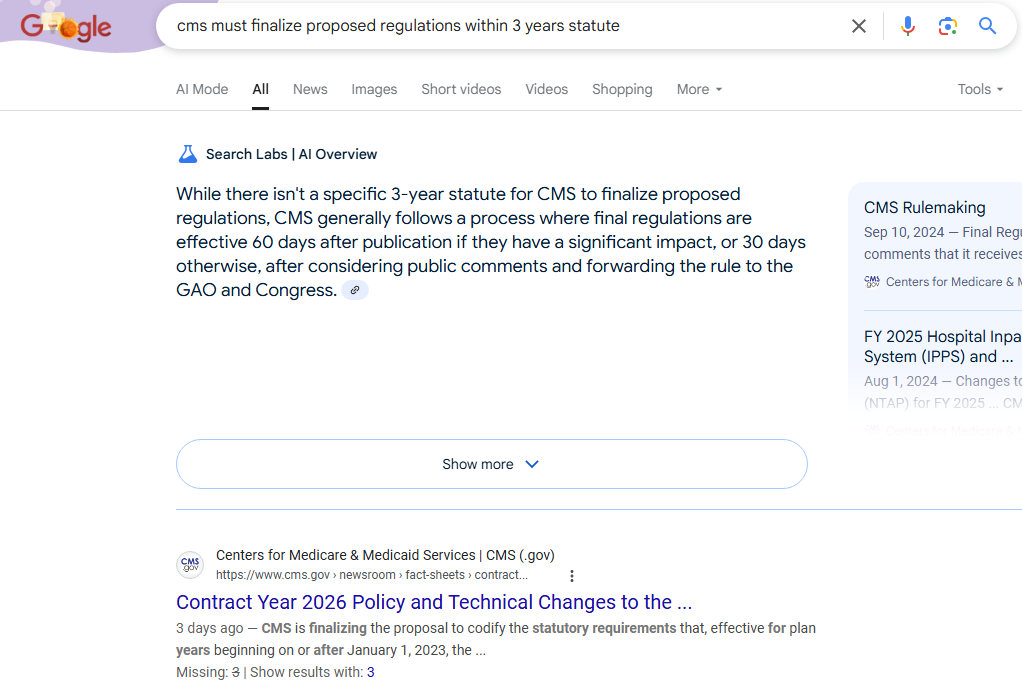
CMS has a statute - buried somewhere - that it must finalize notice & comment proposals within three years, or they expire.   

I asked Google, and it gave me no help.

I asked Chat GPT, and it answered instantly.

###

Here's Google, click to enlarge.    cms must finalize proposed regulations within 3 years statute

Google

###

Here's Chat GPT:

There is a clause in the Medicare statute (Social Security Act) requiring policy proposals to be finalized within 3 years.   Can you tell me where that is?

#

Yes — the clause you're referring to is Section 1871(a)(3)(B) of the Social Security Act, which sets a 3-year deadline for the finalization of certain Medicare regulations.

Here’s the relevant language:

Section 1871(a)(3)(B) of the Social Security Act [42 U.S.C. § 1395hh(a)(3)(B)]:
If the Secretary publishes a proposed rule (including any proposed rule that the Secretary is required to publish under paragraph (2)) and does not issue a final rule within 3 years after the date of the publication of the proposed rule, such proposed rule shall be deemed withdrawn unless the Secretary publishes a notice of continuation explaining why the rule has not been finalized and the timeline for finalization.

Key Points:

  • Applies to Medicare regulations published through notice-and-comment rulemaking.

  • If a final rule is not published within 3 years of the proposed rule’s publication, the proposed rule is withdrawn by law.

  • The Secretary may issue a notice of continuation to keep it alive, but must explain the delay and provide a timeline.

This clause was added in the Medicare Modernization Act of 2003 (MMA) to prevent indefinite delays in finalizing policies.

Let me know if you want the full citation or legislative history — happy to dig deeper.

Sunday, April 6, 2025

Two News Items: (1) FDA PDUFA in Jeopardy?? (2) Tariffs versus Fixed Payment Prices

Two items from the national news this week.

PDUFA, MDUFA - AT RISK?

In a Linked In article, accompanied by an 8-page PDF from AGENCY-IQ, the consultancy argues that PDFUA and MDUFA dollars - which fund half the FDA - could be at risk.   "Exploding" clauses in the statutes require that FDA hit certain spending and performance targets must be met by FDA, or else, all the monies go back to industry.  

For details see here:

https://www.linkedin.com/posts/ccmiles_the-future-of-fdas-user-fee-programs-ugcPost-7313907487147970560-hC-N/ 

TARIFF PRICE HIKES VS FIXED MEDICAL PAYMENTS

As reported in Forbes and elsewhere, large tariffs, if left in place, could substantially raise the cost of medical equipment and supplies (from pacemakers to insulin pumps).  But hospitals and physicians are generally paid at fixed fee schedules by Medicare and under other contracts.   At least in the case of physicians, those fee schedules already substantially lag inflation (as emphasized by AMA and others).   This means that tariff fees are "a rock hitting a hard place" in terms of payments.  

Forbes here:

https://www.forbes.com/sites/amyfeldman/2025/04/04/trumps-tariffs-could-raise-the-price-of-pacemakers-and-insulin-pumps/


Saturday, April 5, 2025

Where Is Digital Pathology Going? Articles Debate.

The buzz on digital pathology includes "good news, bad news" in the path month.

Digital Path - Good News

At Linked In, see Katie Maloney's summary and graphics for recent funding events in digital pathology - over a few months, five companies raise well over $100M.  (See new-news, for April,  Proscia raises $50M.)

https://www.linkedin.com/posts/katie-maloney-442639148_digital-pathology-funding-update-the-activity-7308502645005000705-Lz2z/

Digital Path - Not-so-good News

But a blog by Abhishajke Mahajan at "Owl Posting" summarizes the "bear" or negative view that might might not add up yet.

https://www.owlposting.com/p/what-happened-to-pathology-ai-companies? 

To which see comments at Linked In by Thago Carvalho, W Kemp Watson.

https://www.linkedin.com/posts/thiago-carvalho-93464125a_what-happened-to-pathology-ai-companies-activity-7314203940357648384-UHWC/ 

Third View - CAP TODAY

For a third view, see a February 2025 roundtable discussion at CAP TODAY which I think could be summarized as, "digital pathology is almost here."

###

Separately, see a public-facing article today at Washington Post about the robust growth of AI-Radiology.


Medicare Advantage Final Rule: Drops Chapter with Problematic LCD Language

Last fall, CMS proposed its usual, elaborate Part C/Part D rulemaking in November.  The final has just come out (April 4,2025).  A problematic section about Medicare Advantage was dropped.

See 90 FR 15792, April 15, 2025 (130pp).  The proposal was 240pp, but many sections were dropped from further comment.  The proposal's Table 1 had 17 topics. The final's Table 1 has 8 topics.  The proposal use "equity" about 50 times; the final about 8, mostly to refer to the topic being dropped.


  • The highest-publicity part was a proposal to cover Wegovy-type obesity drugs under Part D.
    • Adminstration has dropped this propoal, period.
    • It was always a little squirrely, since statute for Part D blocks coverage of weight loss drugs, so you had to argue the new-generation drugs were for "treating obesity" not "weight loss."
  • The Problematic LCD Language
    • Medicare Advantage plans are required to cover all regular Part B services (LCD or NCD), but barriers may intervene.
    • CMS has done several rounds of recent policy-making to reduce tardy or absent compliance.
    • In November 2024, CMS proposed that Medicare Advantage plans need only follow the clear language of LCDs, and SHALL NOT USE billing articles or other resources.
    • This was a hang-up, because many LCDs state general coverage themes, but it's impossible to know which services (eg codes) are covered or not covered without the billing article.
    • This is even a bigger deal with MolDx, which may explicitly guide readers to its DEX database for specific coverage (NOT billing articles, NOT the original LCD.)
    • CMS simply eliminated this chapter, including public comment, from its final rule.
CMS also dropped several parts of the November proposal that referred to equity, social determinants of health, or language access. CMS dropped a section about "guardails" about using AI in denials or prior auth.   The proposed rule had 17 topics (proposed, Table 1); the final maybe will have half or less topics.  

Generally, when CMS disagreed with a proposal, it dropped it from the final rule rather than debate it.

The early, or typescript, version of the rule was released April 4, the final Federal Register version will appear April 15.
___
Some long sections of the November 2024 proposed rule were simply dropped from the April 4 final rule.   However, CMS has the option to return to them within 3 years of the original publication (see SSA 1873(a)(3)(B).)     If CMS does not finalize  the November 2024 proposals by November 2027 they are considered withdrawn by default under SSA 1873.

Wednesday, April 2, 2025

One More Note About the FDA LDT "Vacatur" Ruling (cf WSJ today)

Court tosses out FDA LDT rule.  If the government appeals, will it also ask the court to "delay" the effect of the "vacatur" of the rule, until appeals are heard?  

First, the government is unlikely to appeal, and if it does, it's unlikely to ask the result of the decision be stayed-during-appeal.   However, Let's look down the rabbit hole, becausae it's also true that  national rulings by local judges is a hot-button topic in 2025.

###

As we've all heard by now, on March 31, 2025, a Texas federal judge ruled that the FDA LDT regulation was outside the legal scope of the FDA.   After his 51-page decision, he added that the LDT regulation was VACATED (nationwide.)  Rather than ruling against a particular FDA decision or approval or denial, he's ruling against the regulation in itself.

While that might be the end of it, there's a LOT of question in the Trump administration about any local judge who issues any nationwide ban or ruling, against a policy held by the administration.

There's an article about this in today's WSJ. Scroll down to the subtitle, "Defunding the Judiciary."

https://www.wsj.com/opinion/trumps-election-muddle-ad46e69f

See below for some limited direct quotes from WSJ.

In the next 60 days, (A) the DOJ can decide whether to file a notice of appeal (merely one sentence).  But don't forget, (B) the DOJ can also make motions to have the regulation stay in place while court motions proceed.  (If granted, the FDA reg would remain active.)  For example, various parts of  the ACA have lost in court (including the whole act; including its preventative benefits) yet remained in effect during their appeals.   A judge tossed out FDA clerance of mifepristone, but higher courts kept the drug available, despite the loss, during years of appeals.  See the case history in this appeals court decision.  Local judge issues "stay & injunction" both, page 8, and a higher court "stayed" the "vacatur" while the case proceeded, page 9.

See the cited HOUSE letter from the chair of its Judiciary committee -  here.   The letter and proposed legislation - Rogue Rulings - are about "injunctions" not "vacatur," but it shows the issue of national impact of local judges is a hot potato.

"A flood of judge-issued national injunctions against Trump policies continue to inspire a counterflood of Republican proposals to rein in judges. That includes a brand new suggestion from House Judiciary Chair Jim Jordan: Cut off federal dollars.

"In a Monday letter to House Appropriations Chair Tom Cole, Jordan urges the committee to use “the power of the purse” to “enhance judicial restraint and reaffirm democratic principles.” Specifically, he suggests appropriations language “prohibiting the use of taxpayer dollars and federal resources to issue or enforce these overbroad injunctions beyond the specific parties in front of an issuing court,” backed by a more specific bar on any funds that would be used to “compel compliance, impose fines, or conduct contempt proceedings related to such injunctions.”

"The Jordan proposal comes amid a broader GOP push for legislation to curb “judicial policymaking.” The House Rules Committee voted on Tuesday to advance Rep. Darrell Issa’s “No Rogue Rulings Act”—which would limit district court judges’ ability to issue universal injunctions—while both Sens. Chuck Grassley and Josh Hawley have introduced Senate versions of the same." 

[For WSJ links see original]
[Kimberley Strassel, April 2]

###

###

AI CORNER CHAT GPT4o

###

Let's emphasize, the most likely situation is the government does NOTHING.   But let's suppose - go down the rabbit hole - that the government DOES file a notice of appeal.   Is there any additional action the government could do, to keep the FDA LDT regulation active during the long appeals process.   (The government has gotten this before, such as when a judge issued a VACATUR in Braidwood, yet, the preventive policy remained active during the appeals.)

####

Yes, the government does have options to preserve the FDA’s LDT rule during the lengthy appeals process—even though the district court vacated the rule outright on March 31, 2025. Drawing from both Braidwood (2024) and general APA precedent, here’s a practical overview of what could happen next:


๐Ÿ”น Default Path (if Government Does Nothing):

If DOJ files no motion to stay the vacatur or delay implementation, then:

  • The vacatur takes effect immediately.

  • The LDT rule is effectively nullified nationwide under the APA’s “set aside” clause (5 U.S.C. § 706(2)).

  • Laboratories would not be subject to the FDA’s new LDT framework, and the case proceeds to the Fifth Circuit on appeal.

  • The FDA would remain in regulatory limbo, as it cannot enforce a rule that has been vacated.


๐Ÿ”น Option 1: DOJ Files Notice of Appeal Only (within 60 days)

A notice of appeal is a short, boilerplate filing—often one page—saying the government intends to appeal. However:

  • Filing a notice does not automatically stay the vacatur.

  • FDA still cannot enforce the LDT rule unless additional relief is sought.


๐Ÿ”น Option 2: DOJ ALSO Moves to Stay the Vacatur Pending Appeal

This is the key parallel to Braidwood.

In Braidwood v. Becerra (2024), the district court both vacated parts of the preventive services mandate and issued an injunction. But the Fifth Circuit granted a partial stay of that vacatur during the appeal—so the mandate continued in effect despite the district court’s ruling against it.

In the LDT case, the government could:

  1. File a motion to stay the vacatur in the district court (Judge Jordan).

    • He is bound by 5th Circuit precedent, but could still stay his own ruling temporarily.

  2. If denied, they could file a motion for a stay pending appeal with the Fifth Circuit.

  3. If again denied, they could escalate to SCOTUS for an emergency stay.

Such motions typically argue that:

  • The government has a likelihood of success on appeal, or at least serious legal questions exist;

  • There would be irreparable harm to public health or regulatory interests;

  • A stay would serve the public interest.

In Braidwood, the stay was granted on these grounds—even after vacatur—so there’s a viable path to keep the FDA rule alive during appeal.


๐Ÿ”น Practical Considerations

Even with vacatur:

  • The FDA rule was not yet in effect and was to be phased in over 4 years.

  • No lab is currently harmed by its absence, so urgency is limited.

  • This weighs against a stay [against keeping the regulation alive], unless the government can show that the industry will create chaos or fragment if FDA is sidelined during appeal.

But on the flip side:

  • Letting implementation proceed during appeal would cause enormous burdens on laboratories, only to be potentially reversed later. That would support keeping vacatur in place.

So, IF the government files a notification of appeal, which it probably won't, the court probably wouldn't change the policy status, which is current on "vacatur."

✅ Summary:

ScenarioActionFDA Rule Enforceable?
No actionDOJ appeals only❌ Rule vacated; not enforceable
Motion to Stay Filed (granted)District/Fifth Circuit/SCOTUS✅ Temporarily enforceable
Motion to Stay Filed (denied)Vacatur remains❌ Rule remains blocked
Rule implemented then reversed on appealHigh cost, potential chaos❌ Not preferred

So yes—DOJ can request a stay, and if the Fifth Circuit echoes its Braidwood logic, it may be granted, allowing FDA to enforce the rule during appeal. But politics, optics, and the upcoming election may weigh against pushing too hard.


Oncotype Dx Test Turns 21 Years Old

 As I was writing a deck on some bits of genomic history, I noticed the OncotypeDx test had its 20th anniversary in April 2020.   While this event got a bit of attention (check Google), I don't recall seeing any.

So, on April 11, 2025, Oncotype Dx has its 21st birthday.  Based on their iniitial April 2004 publication in NEJM.


https://www.nejm.org/doi/full/10.1056/NEJMoa1804710


Tuesday, April 1, 2025

National Academies: Release Booklet on "Clinical Guidelines & Adoption of Genomic Testing"

In October 2024, the National Academies held a workshop on the topic, "Exploring Clinical Guidelines for the Adoption of Genomic Testing."

In 2025, they have released a 15-page summary of the conference.

Find it here:

https://nap.nationalacademies.org/catalog/28572/exploring-clinical-guidelines-for-the-adoption-of-genomic-testing-proceedings

See my blog at the time, and the workshop home page, which has videos and powerpoints.


##


See a June 2024 National Academies report on racial-ethnic problems in health care.

https://www.nationalacademies.org/news/2024/06/little-progress-has-been-made-in-closing-racial-and-ethnic-gaps-in-u-s-health-care-federal-government-should-act-to-fix-structural-inequities


AMA Releases Newest PLA Codes (April 2025)

AMA releases new PLA codes quarterly and to no one's surprise, the list for the second quarter is now online.

https://www.ama-assn.org/system/files/cpt-pla-codes-long.pdf

AMA releases a cumulate PDF that includes codes not included in this year's AMA CPT book.   In practice, this means codes submitted on around June 15 or later (for the July quarter review, or later) appear in this PDF.  The new codes are those released April 1, 2025. Events released on April 1 will be effective for use on July 1.

  • AMA summarizes that it revised one code (0285U), deleted 6 codes, and added 23 codes.
  • There were editorial updates, such as manufacturer, for 5 additiional codes.
  • New codes begin at 0552U and run up to 0574U.

Among publicly held companies, see Guardant REVEAL (for MRD), 0569U; Biomerieux Biofire respiratory tract 0564U.  Haystack/Quest has 2 MRD codes (0560U, 0561U), for baseline and for monitoring. Illumina's FDA approved TruSight test, 517 genes, 0543U.  

Not new, from December 2024, I notice CareDx Allosure, not organ specific, 0540U.  

##

Code applications for the Spring quarter (Q2) were due about March 11 and AMA is currently reviewing them.  Will be posted for comment April 15, 2025.